
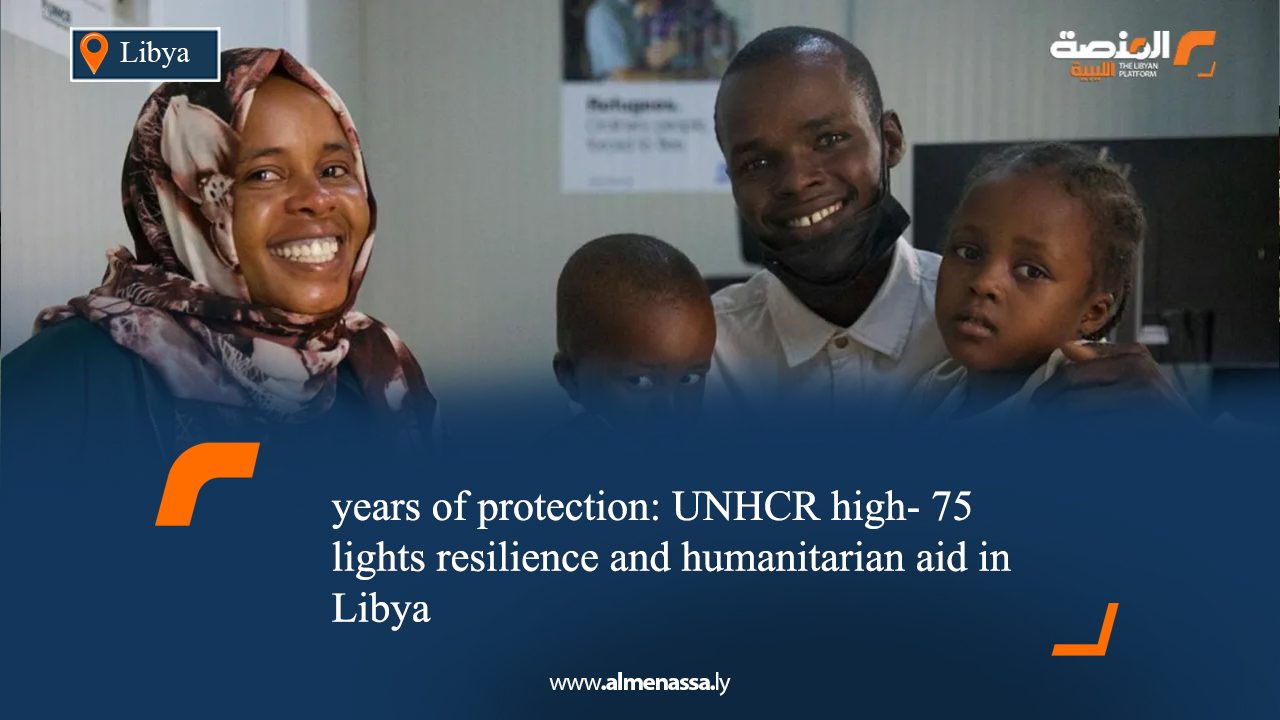
As 2025 draws to a close, the United Nations High Commissioner for Refugees (UNHCR) has marked its 75th anniversary by reflecting on its extensive humanitarian mission in Libya, which began in 1991. Operating through offices in Tripoli, Benghazi, Sabha, and Kufra, the agency reaffirmed its commitment to protecting thousands of families fleeing conflict and persecution. It underscored that international support remains a vital lifeline for these displaced populations, whose ultimate aspiration remains a safe return to their homelands.
Throughout the year, the agency documented a series of transformative interventions. In Tripoli, family reunification programmes brought together loved ones separated by war, such as Zubaida and Ahmed, who were reunited after months of lost contact. Meanwhile, the Emergency Transit Mechanism ended a 13-year journey of hardship for Rahma, and humanitarian corridors provided safe passage to Italy for vulnerable individuals like Khadra and her children, offering them a fresh start in security and dignity.
In southern Libya, efforts focused on life-saving assistance for those crossing the desert on foot. Among them was Samia, who received essential relief items and wheelchairs for her disabled children after a gruelling eight-day trek. Beyond material aid, the UNHCR’s support extended to mental health services for traumatised children, such as young Hamza, and the rehabilitation of public health centres. In cities like Benghazi, the provision of essential vaccinations has become a cornerstone of survival for both refugees and their host communities.
The UNHCR concluded its anniversary reflections by acknowledging that these milestones were made possible through close cooperation with donors and national partners. It noted that 75 years since its inception, the global need for humanitarian protection is as urgent as ever, and that for every refugee on Libyan soil, the primary hope remains a lasting peace.