
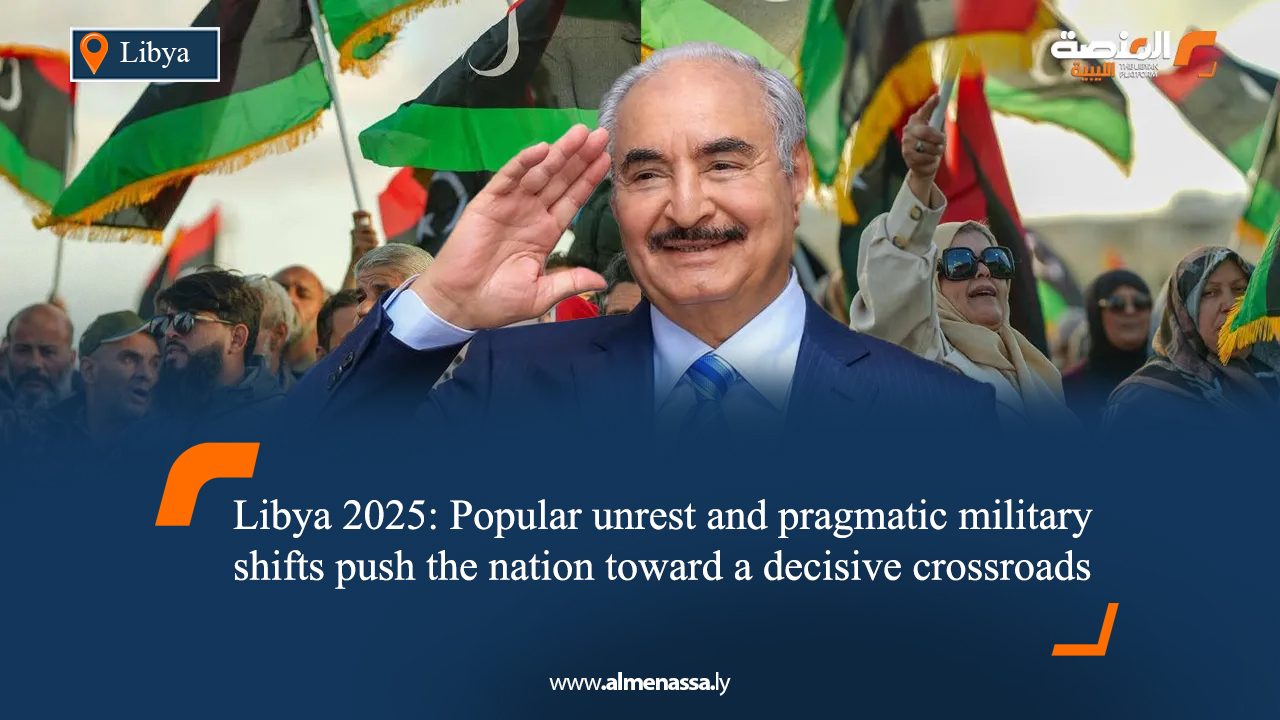
Throughout 2025, Libya’s political landscape has been increasingly dictated by the street, as popular movements emerged to challenge the protracted deadlock. Widespread protests, which peaked in Tripoli and spread to Zawiya, Tajoura, and Bani Walid, called for the resignation of Abdul Hamid Dbeibah’s Government of National Unity. Protesters cited chronic corruption, security failures, and the collapse of essential financial services as the primary drivers of their discontent. This internal pressure was further bolstered by mass demonstrations early in the year against potential normalisation with the Israeli Occupation, and sustained digital campaigns demanding an end to the liquidity crisis that has devastated the middle class.
In a notable strategic pivot, General Khalifa Haftar’s General Command aligned itself with the people’s choice, urging citizens to engage in peaceful demonstrations to force a path toward national elections. This rhetoric materialised on 28 November, when coordinated marches called for a presidential vote to end the institutional stalemate. Parallel to this populist outreach, the General Command adopted a striking pragmatic foreign policy. While maintaining a strategic alliance with Cairo and signing a logistics protocol with Russia and Belarus, it pursued an unprecedented detente with Ankara. The visit of General Saddam Haftar to Turkey in November to discuss intelligence and security cooperation marked a significant realignment in regional power dynamics.
The year also saw a rare institutional achievement in the successful conduct of municipal elections over three phases, providing a glimmer of local legitimacy amidst the national impasse. While part of civil society engaged in the UN-led “structured dialogue,” other political factions remained sceptical, deepening the complexity of the mediation efforts. As 2025 draws to a close, Libya stands at a critical juncture; the combined pressure of a restive public and shifting military alliances has forced the question of a comprehensive national settlement back onto the global stage, with the hope of finally delivering a long-awaited electoral mandate.