
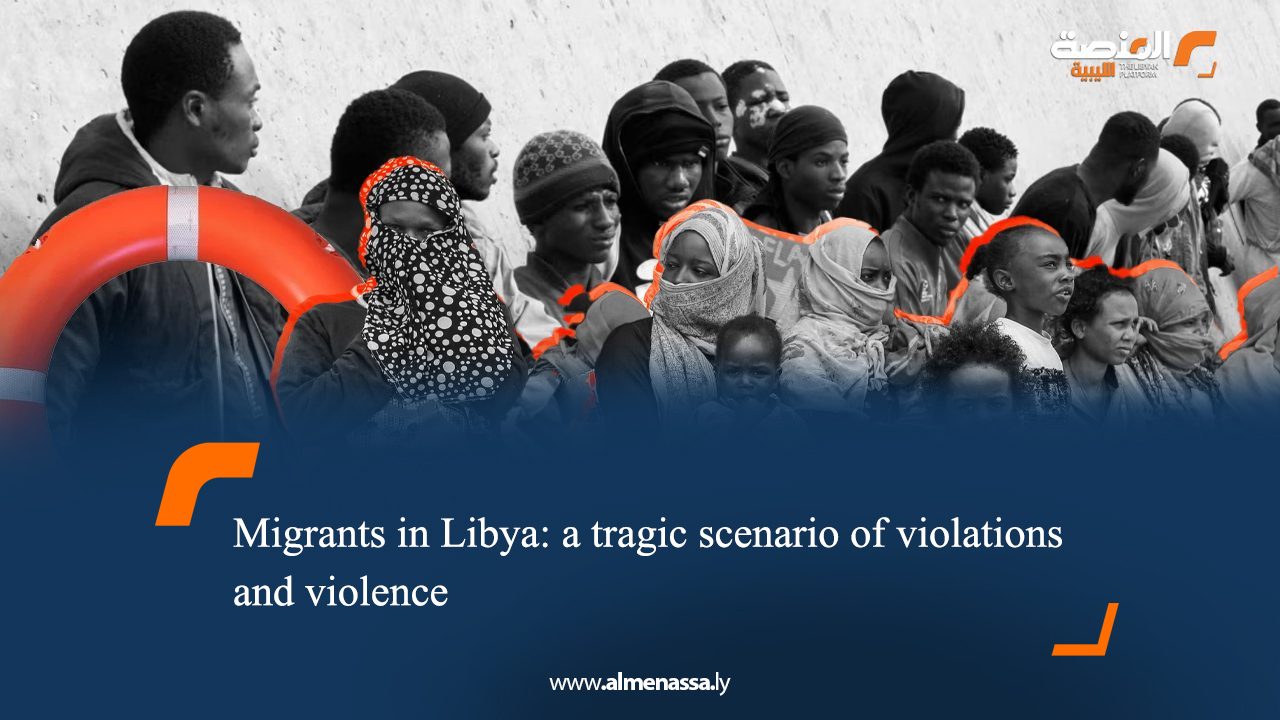
Large numbers of migrants stranded in Libya face systematic violations ranging from torture and exploitation to death, in a scene reflecting security collapse and institutional shortcomings, according to international and human rights reports, most notably a report by Pixology Foundation for Peace, Development, and Human Rights, which highlights the suffering of this vulnerable group amidst power struggles and international complicity.
Smuggling Networks: Empires of Darkness
Libya, due to its geographical proximity to European coasts, has become a major transit point for irregular migrants seeking a better life, still their journey often turns into a nightmare upon arrival. In the security vacuum, human trafficking and slave trade gangs flourish, exploiting migrants through forced labor or detention for ransom.
According to the “Missing Migrants” Project of the International Organization for Migration, 965 deaths or disappearances were recorded in Libya in 2024, more than 22% of them on land routes. These criminal networks operate away from the authorities’ eyes in cities such as Sabrata, Zuwara, and the south, generating huge profits.
Paths of Death: From the Desert to the Sea
The risk of death is not limited to reckless sea voyages but begins from the first moment. Before reaching the coasts, migrants are subjected to torture and detention in secret centers run by armed militias, and the bodies of victims are buried in the desert without oversight. As for official detention centers, they turn into prisons for forced labor, rape, and torture, where detainees are forced to work without pay and are punished with physical or sexual violence if they refuse.
Shocking Numbers: Crimes Without Accountability
* 434 migrants died, and 611 others went missing off the Libyan coast between January and August 2024.
* At least 60 migrants died in the March 2024 incident after sailing from Zawiya.
* 21,000 migrants were forcibly returned to Libya during the same year, where they faced violations described by the United Nations as “crimes against humanity.”
* The death toll in the Mediterranean over a decade (2014-2023) rose to 28,854 victims, with an upward trend since 2019.
International Complicity: Mine-Laden Roles
The UN fact-finding mission revealed the Libyan authorities’ knowledge of systematic violations against migrants, including attacks at sea and in detention centers. It also pointed to the European Union’s direct and indirect support for the Libyan coast guard by providing financial funding, boats, and equipment used to intercept migrants and return them to the same “hell.”
Legal Contradiction: Covenants Without Implementation
Despite Libya’s ratification of international agreements to combat human trafficking (such as the Palermo Protocol 2004 and the Arab Protocol 2006), serious legislative gaps appear:
* The absence of a clear definition of “human trafficking” in local laws.
* Lack of effective strategies to protect victims, especially women and children.
* Overlapping powers of security agencies, which hinders the accountability of those involved.
Urgent Calls
The report called for:
* Developing a comprehensive national strategy to protect migrants based on international covenants.
* Enabling civil society organizations to monitor detention centers and provide support.
* International community pressure to stop the forced return of migrants to Libya.
* Holding the European Union responsible for supporting systems that violate human rights.
The violations continue to perpetuate a vicious cycle of violence, especially in western Libya, where the lives of migrants are reduced to anonymous numbers while solutions falter between power struggles and contradictions in international policies. Will recommendations turn into action before more names are added to the death lists?