
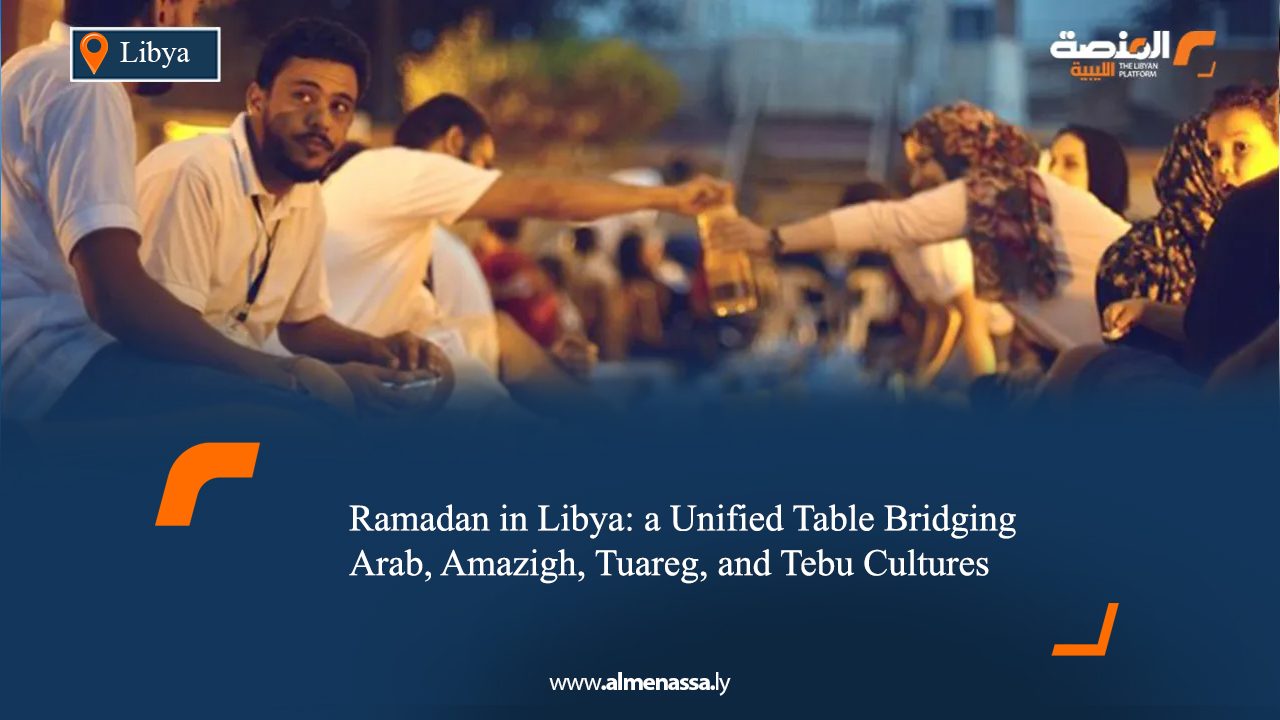
In Libya, the holy month of Ramadan serves as a profound cultural tapestry where the traditions of Arabs, Amazigh, Tuareg, and Tebu converge into a singular display of national identity and authentic solidarity. As the crescent moon is sighted, cities and towns across the nation—from the Mediterranean coast in the north to the depths of the Sahara Desert in the south—transform into vibrant hubs of communal activity. The “Arabic Sherba” (soup) stands as the undisputed centerpiece of every Iftar table, acting as a constant culinary bridge and an indispensable staple that graces every meal throughout the holy month. Despite the rich ethnic and cultural diversity, the Libyan Ramadan menu remains remarkably consistent at its core, complemented by local touches that distinguish the regions. While the soup is garnished with parsley in Tripoli and the West, residents of the East, in cities like Derna and Tobruk, prefer the flavor of green coriander. These dishes are accompanied by meat or cheese Burek, spicy Libyan salad, and assorted pastries that now rival traditional historical dishes such as Mbakbaka, Reashta, and Couscous.
Al-Manassa documents history of Grand Mosque, Sabha’s religious and cultural landmark
Preparations for the holy month typically commence in mid-Sha’ban, with families flocking to markets to secure essential ingredients for sweets, stockpile food supplies, and purchase local meats, despite inflation and rising prices. Upon the official start of Ramadan, the rhythm of daily life shifts significantly toward the evening hours, with streets remaining vibrant with activity until dawn. While security challenges over the past decade have altered traditional in-person visiting patterns compared to the pre-2011 era, the social fabric remains strong through digital greetings and social media exchanges.
The first day of Ramadan holds a sacred social status and unbroken rituals within Libyan society, traditionally marked by the gathering of the extended family at the parents’ home, where married sons ensure they break their fast with their parents. Before the Maghreb call to prayer, the family sits in a solemn spiritual atmosphere. The mother or grandmother prepares Libyan coffee flavored with dried coriander seeds instead of cardamom, while milk and dates are served to break the fast. Following the Maghreb prayer, the main meal is served, featuring the soup, salad, Burek, and a side dish that varies by region. In the East, dishes like “Mubattan” (stuffed potatoes), “Usban” (stuffed sausage), and pasta with mixture are famous. Meanwhile, Tripoli maintains a special place for Burek, Couscous, and “Reashta al-Kaskas.” In the Western Mountains, barley-based “Bazine” stands out, and in the South, dishes vary between “Fatat,” okra porridge, and “Bazine” with milk and ghee.
Houn Youth Hostel attracted thousands of visitors from 13 nationalities in 2024
Beyond the culinary customs, Ramadan in Libya is deeply rooted in intensified worship and spirituality. Mosques are filled with men, women, and youth for Taraweeh and Tahajjud prayers, while religious lessons and Quranic recitals flourish after mid-afternoon and post-Taraweeh. Sufi lodges (Zawiyas) maintain their traditional role by hosting evenings of dhikr and prophetic praises to commemorate holy nights. This spirit of devotion is matched by widespread charitable initiatives, including “Tables of the Merciful” for the needy, displaced persons, and expatriate workers. Post-prayer social life is characterized by the consumption of “Sfeniz” (fried dough) dipped in honey or date syrup, neighborhood football tournaments for the youth, and gatherings for the elders to socialize and play cards. As the month draws to a close, homes turn into workshops for crafting traditional Eid sweets like “Maqroud,” “Ghorayeba,” and “Ka’ak,” while the markets bustle with families preparing for the festivities by buying new clothes for children, all united by a collective prayer for the peace and prosperity of their cherished homeland, echoing the popular supplication: “Oh Lord, on the day of Eid… bring joy to the dear homeland”.