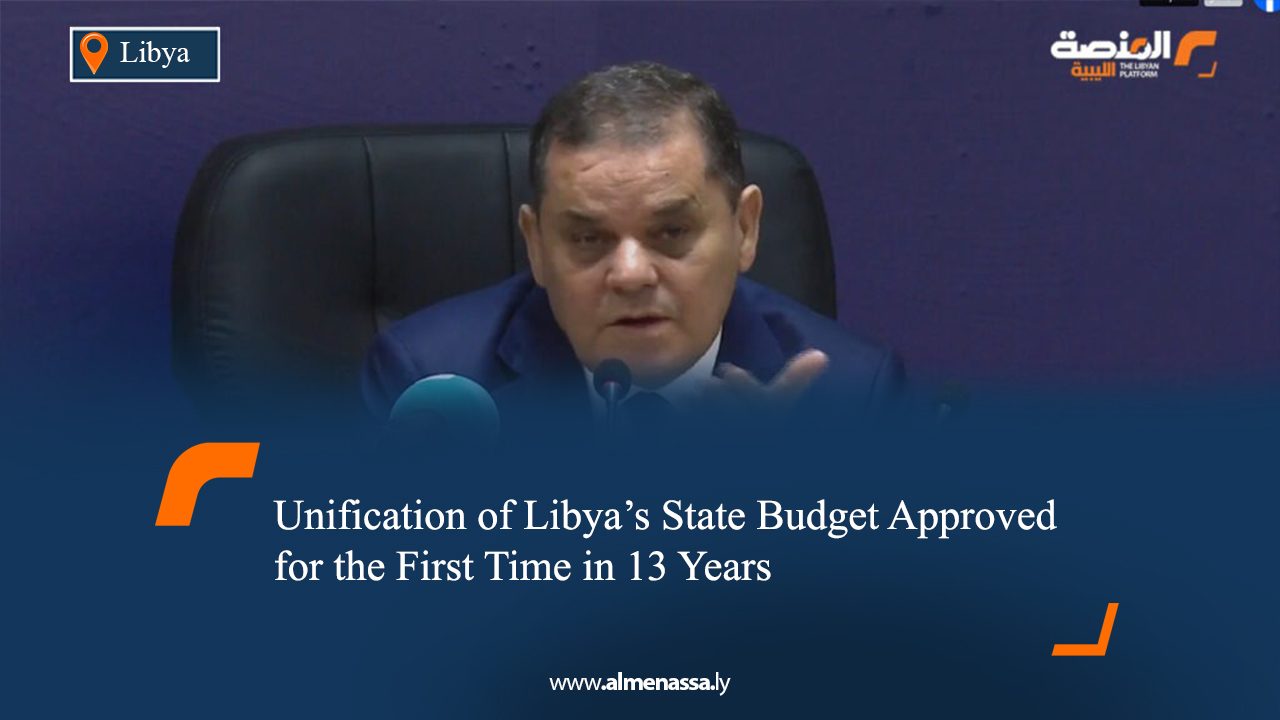
Prime Minister Abdul Hamid Dbeibeh, chairing the second cabinet meeting of 2026 in the municipality of Qasr al-Akhyar, announced the unified national budget, effectively ending thirteen years of financial fragmentation. This breakthrough was achieved through a financial and developmental accord under the “2+2” framework, following seven months of intensive negotiations involving diverse Libyan political factions.
The Prime Minister emphasized that this agreement centralizes public finance under a single Ministry of Finance and one Central Bank, ensuring that all state revenues are deposited into the public treasury. The unified budget allocates 73.36 billion dinars for salaries, 10 billion for operational expenses, and 44 billion for subsidies. Notably, approximately 40 billion dinars are earmarked for the development chapter, which Dbeibeh described as the cornerstone of the deal, covering infrastructure, education, and essential services through a consolidated investment schedule.
To ensure accountability, the agreement mandates strict oversight measures, including a ban on parallel spending and unauthorized public debt. Furthermore, the National Oil Corporation will undergo independent external audits, with a requirement for monthly reports on expenditures and project progress. Dbeibeh concluded by stating that the primary beneficiary of this economic stability is the Libyan people, while also announcing a series of local infrastructure projects for Qasr al-Akhyar aimed at upgrading health, education, and utility networks.