
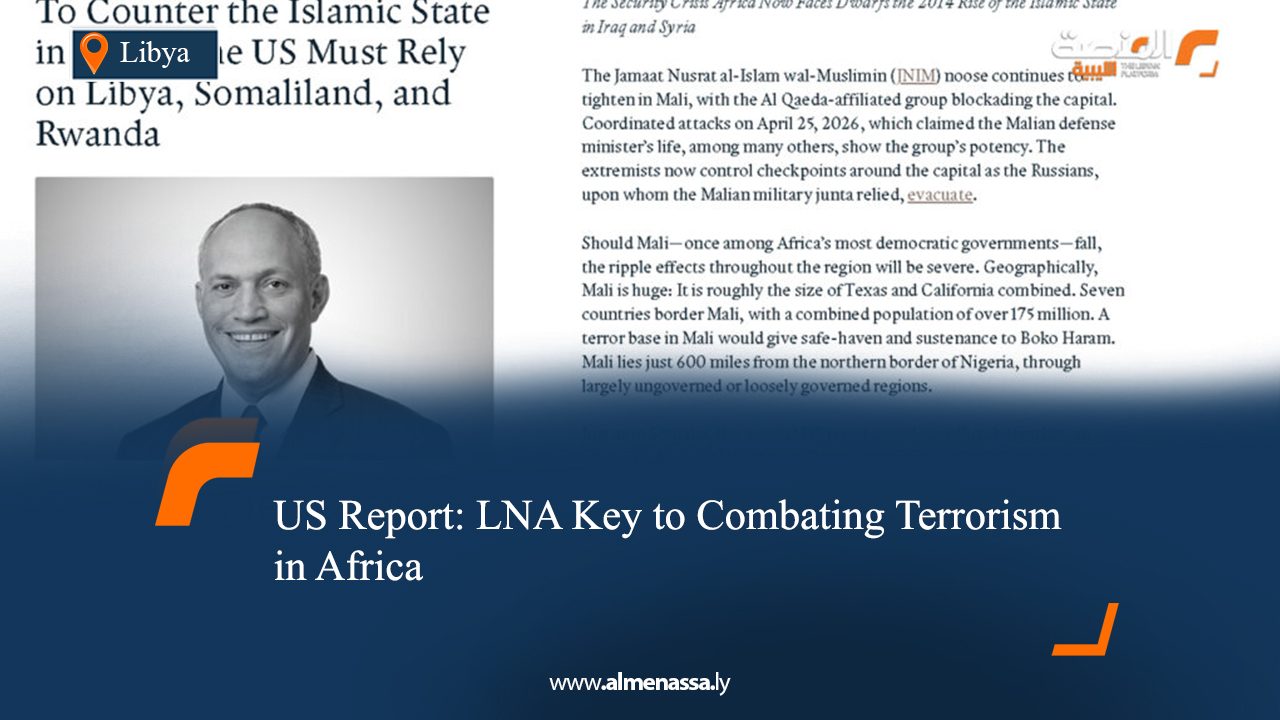
Michael Rubin, a resident scholar at the American Enterprise Institute, asserted that the Libyan National Army, led by Field Marshal Khalifa Haftar, stands as a primary force capable of confronting extremist groups and securing vital oil facilities. Rubin criticized continued international backing for the Tripoli government, accusing Abdul Hamid Dbeibah and Sadiq al-Ghariani of sheltering militant factions in the west and south, while calling on Washington to impose sanctions on them and prioritize effective local partners.
The report urged the U.S. administration to abandon fragmented diplomatic approaches in favor of a unified African strategy built on alliances with stable regional actors, specifically citing Libya, Rwanda, and “Somaliland”. Rubin warned that the expanding influence of Al-Qaeda affiliates in Mali—following assassinations of defense officials in April 2026 amid a waning Russian presence—poses a severe threat to the Sahel and West Africa, potentially linking up with Boko Haram’s operations in Nigeria.
Furthermore, the analysis highlighted “Somaliland” as a reliable Western ally due to its relative stability compared to the central Somali government’s struggle against Al-Shabaab. Rubin also commended Rwanda’s pivotal role in bolstering regional security across Mozambique and Central Africa, presenting it as a model for stability. The report, translated by Almanassa, concluded that engaging such capable local forces is essential for any future U.S. counter-terrorism strategy on the continent.