
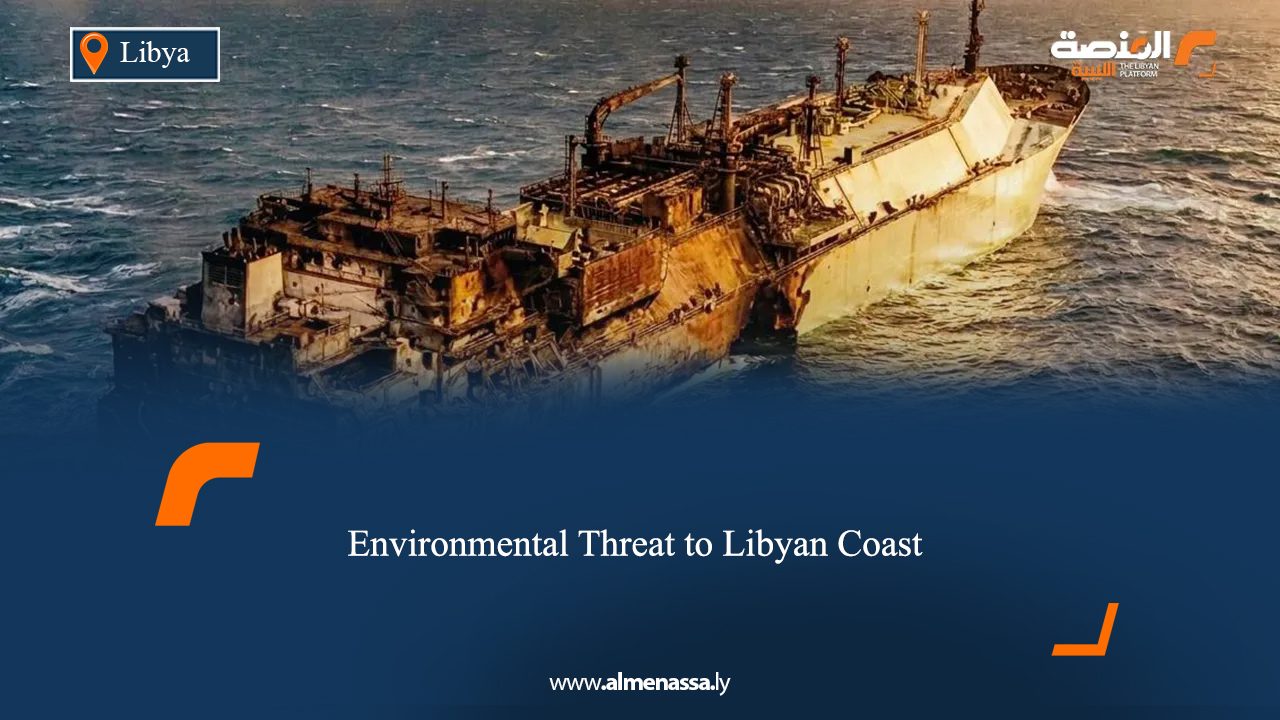
Libya’s western coastline is facing a potential environmental catastrophe as the severely damaged Russian LNG tanker, Arctic Metagas, drifts toward the shores of Zuwara. The vessel was compromised by an explosion and subsequent fire following a reported drone attack off the coast of Malta on March 3, 2026.
Carrying approximately 100,000 cubic meters of liquefied natural gas, the tanker lost propulsion and began drifting southwest due to prevailing currents and winds. While all 30 crew members were successfully rescued, the structural integrity of the ship remains a significant concern for Libyan authorities.
The Ministry of Defense and the Coast Guard’s Search and Rescue Coordination Center are currently managing the situation, deploying technical support from oil field tugboats and specialized crews from Misrata Free Zone, including the tugboat Al-Samida. Simultaneously, the National Oil Corporation (NOC) has engaged international maritime salvage experts to oversee the delicate operation of towing the vessel to a secure location, aiming to mitigate any ecological fallout.
Warnings of Turning Libya into a Global Conflict Zone: The Implications of the Russian Tanker Crisis
International Warnings and Environmental Risks as Damaged Russian Gas Tanker Enters Libyan Waters
Concerns remain high in the Municipality of Zuwara, where local officials have urged the government to prioritize public safety and coastal protection over industrial assets. The Ministry of Environment has convened emergency sessions with the Naval Staff and Port Authority to coordinate a defense against potential leaks or secondary explosions, as the tanker remains stationed roughly 44 kilometers offshore under constant surveillance.
Environmental specialists have issued an urgent framework for the crisis, calling for the immediate relocation of the tanker to a safe deep-water zone, continuous aerial and maritime monitoring to track any gas plumes or structural shifts, and sustained cooperation with international environmental agencies to prevent a large-scale maritime disaster.