
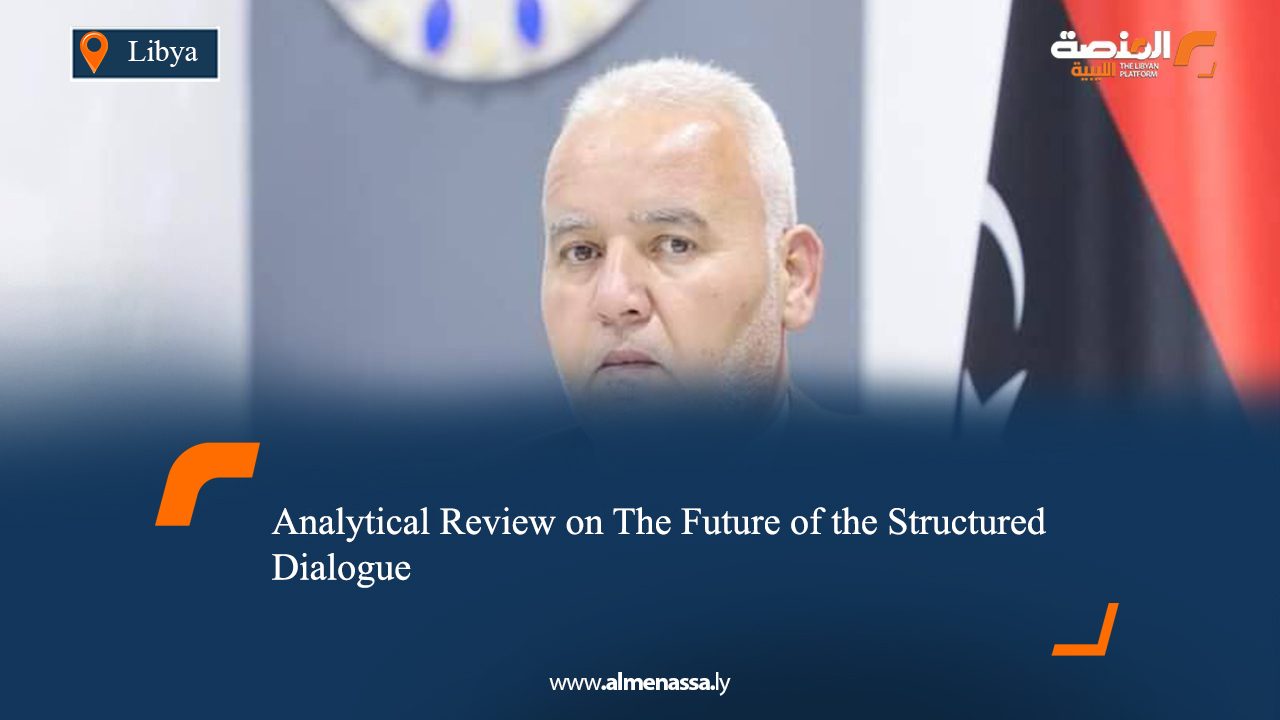
Mustafa al-Bahbah, a member of the Structured Dialogue Committee, emphasized that the true value of the dialogue’s outcomes lies not in the mere publication of its final report, but in whether these results can transform into a potent political leverage. He explained that if these outputs remain purely advisory, they will easily be bypassed by powerful factions whenever they clash with their interests. He noted that while an opportunity for a breakthrough exists in Libya, it is far from guaranteed, as the core issue has never been a scarcity of ideas, but rather the total absence of real consequences for spoilers.
Al-Bahbah urged that the dialogue’s outcomes must be treated as an indivisible package, encompassing the constitutional base, the government, the electoral commission, legislations, guarantees, and the broader security and financial environment for elections, warning that dismantling these elements would drag the country back into the old cycle of obstruction. To ensure success, he outlined a roadmap starting with the UN Mission explicitly adopting these results and presenting them to the UN Security Council as a backed political framework to serve as a national and international benchmark for any upcoming settlement. This must include clear rules on implementation, monitoring, timelines, and the political cost of disruption; otherwise, he concluded, these outputs will simply become another respected but forgotten document in the archives of the Libyan crisis.