
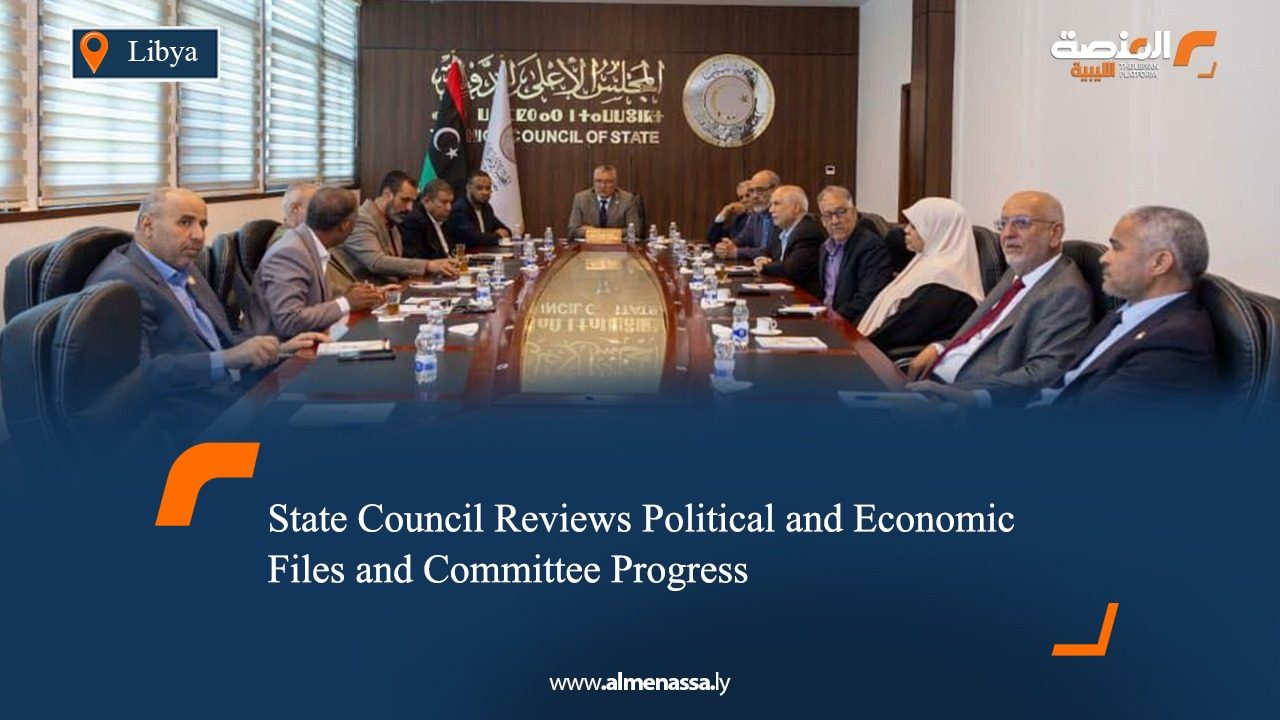
On Tuesday, April 21, the Presidency Office of the High Council of State, chaired by Mohamed Takala and attended by his deputies and committee heads, held an expansive meeting to monitor institutional workflow. The session focused on auditing periodic reports concerning the political, economic, and service-related files on the Council’s agenda. This review aimed to evaluate parliamentary performance and synchronize efforts across various committees to ensure they effectively address current challenges and meet pressing national requirements.
The attendees reviewed a series of technical reports from standing committees, providing a detailed diagnosis of the current political, economic, and service-related landscapes. Discussions focused on measuring the effectiveness of legislative and oversight roles, with particular attention paid to the repercussions of economic challenges on citizens’ purchasing power. The meeting also explored ways to develop internal workflows and coordinate urgent service tracks. Participants emphasized the necessity of modernizing institutional performance to be more responsive to existing challenges, ensuring a tangible improvement in living standards and essential services.
Discussions addressed the formulation of future strategies for the standing committees, emphasizing the importance of integration and coordinating collective efforts to ensure unified stances on major national issues. Participants highlighted the necessity of revitalizing the Council’s oversight and legislative roles, viewing them as essential instruments for rectifying administrative and economic imbalances. By strengthening the foundation of state institutions and protecting them from fragmentation, these efforts aim to foster a legal environment that supports stability.
A significant portion of the meeting was dedicated to evaluating the latest developments in Libya’s political landscape and strategies to resolve institutional fragmentation. Participants emphasized the importance of aligning perspectives across committees to bolster a political solution rooted in broad national consensus, aimed at fostering an environment conducive to holding elections. The Council reaffirmed its commitment to articulating clear political understandings that terminate the current stalemate and pave the way for inclusive elections reflecting the Libyan people’s will, as part of broader national and international efforts to rebuild state institutions on stable democratic foundations.
The session culminated in a reaffirmation of the High Council of State’s role in bolstering national stability through its advisory and legislative mandates. The Council’s current strategy focuses on intensifying political efforts to bridge divergent views among key stakeholders and actively contributing to the formulation of consensus-based solutions to the existing crisis. By mediating between various political factions, the Council aims to secure a peaceful and sustainable path out of the current deadlock, ensuring the continuity of the democratic process.