
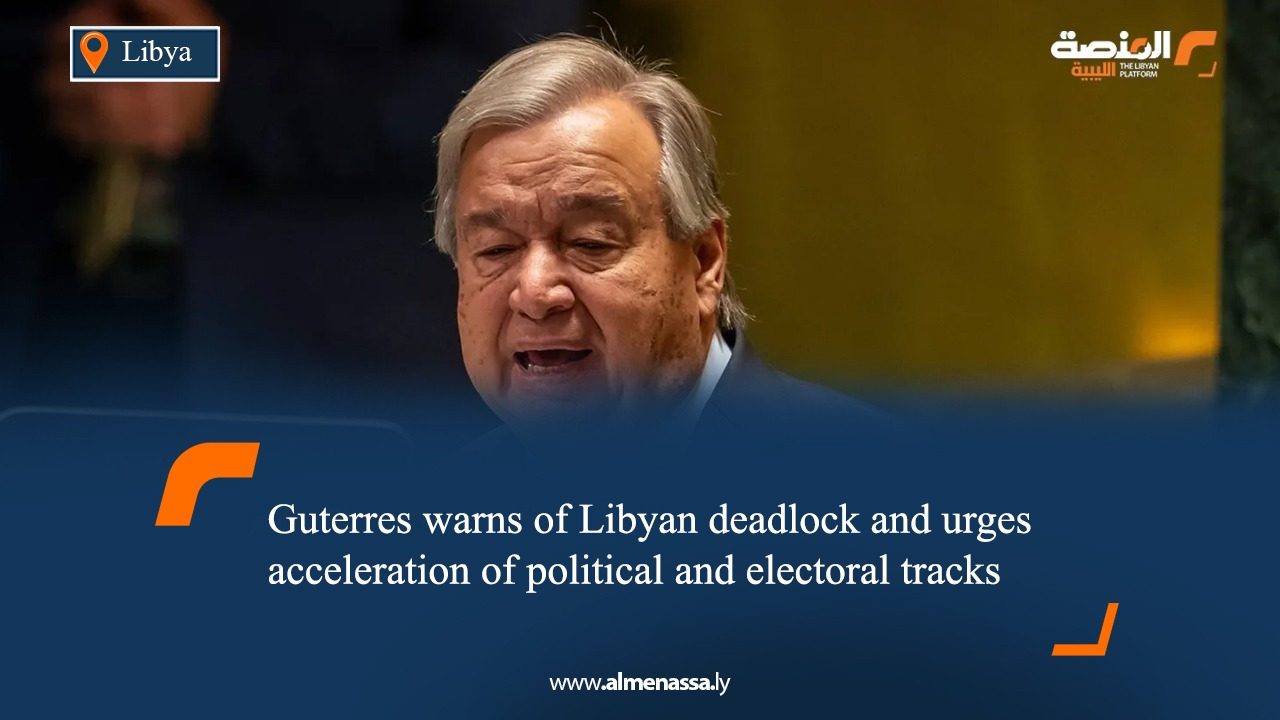
The UN Secretary-General, António Guterres, highlighted the persistent institutional, political, and security challenges hindering Libya’s progress, despite the UN mission’s efforts to advance the political process. In a report submitted to the Security Council, Guterres clarified that the country is undergoing a highly sensitive phase that necessitates a national consensus to overcome the current stagnation.
Political Obstacles and the Electoral Path
The report criticized the lack of genuine achievement by the High Council of State and the House of Representatives in implementing the roadmap, noting that unilateral decisions from both sides have undermined public trust and disrupted the unity of the High National Elections Commission, preventing the formulation of a final electoral framework. In this regard, Guterres called for the adoption of the proposal presented by Special Representative Hanna Tetteh last February, considering it the most realistic option to transcend disputes and unify governmental structures. He also praised the positive interaction in structured dialogue sessions as a foundation for a Libyan-owned political process leading to credible polls.
Local Governance and Economic Reality
The Secretary-General considered the success of municipal council elections in a peaceful climate as a pillar for strengthening legitimacy from the bottom up and improving the quality of direct services for the population. On the financial front, the report warned of the consequences of institutional division and uncoordinated spending, which have led to increased deficits and reliance on the energy sector, emphasizing the necessity of drafting a unified budget and activating transparency and structural reform measures.
The Judiciary and International Accountability
Guterres warned of the risks of politicizing and dividing the judicial institution, demanding the guarantee of its total independence. Regarding international justice, the report welcomed the handover of the first suspect to the International Criminal Court as a step toward ending impunity, while urging the international community to assist in executing existing arrest warrants.
Humanitarian Crises and the Migration File
The Secretary-General expressed deep concern regarding the situation of migrants, pointing to the growth of smuggling and trafficking networks and the existence of secret detention centers and mass graves. He demanded that Libyan authorities dismantle these criminal networks and close illegal facilities, stressing the need to protect human rights and provide dignified paths for voluntary return. Guterres concluded his report by emphasizing that Libya’s stability remains contingent on ending divisions and engaging in a political path that ensures the building of a unified state through the ballot box.